Avendon: A Documentary
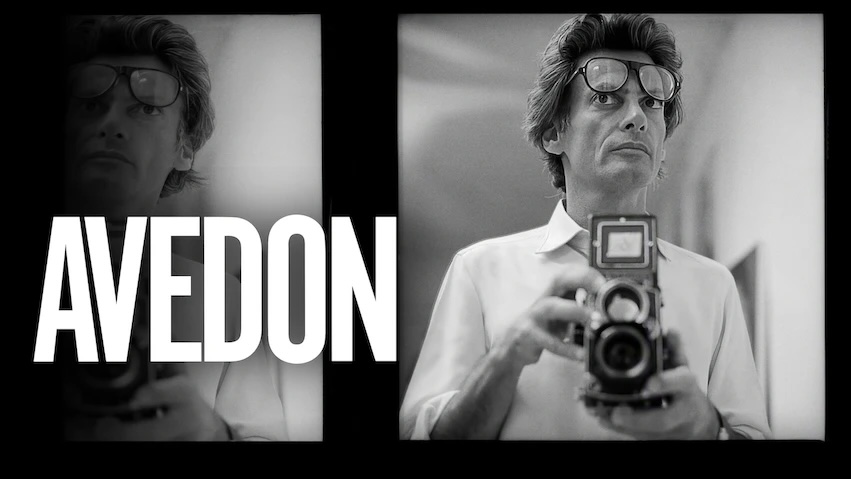
The life and work of legendary photographer Richard Avedon comes into focus through archival footage and new interviews in this intimate documentary.
Across a career that spanned more than half a century, Richard Avedon operated as both mythmaker and interrogator. His work moved effortlessly between the polarities of twentieth-century American culture—capturing Hollywood royalty and sitting presidents with the same clarity he afforded to Appalachian coal miners and nameless drifters. By the time of his passing in 2004, Avedon had done far more than build a monument to portraiture; his fashion work and studio studies had fundamentally changed the visual grammar of style.
In Avedon, a documentary directed by Ron Howard that premiered at the 2026 Cannes Film Festival ahead of its November 11 release on Netflix, the artist’s legacy comes into focus. Drawing on unprecedented access to the Richard Avedon Foundation’s personal archives—unearthing never-before-seen stills, rare behind-the-lens studio footage, and newly commissioned interviews with his closest artistic collaborators—the film interrogates how Avedon’s vision both mirrored and actively re-engineered the culture. Crucially, it asks what happens behind the stark white backdrop, revealing that even the most celebrated photograph is only half the story.
Produced by Imagine Documentaries and Fifth Season in association with the Richard Avedon Foundation, the project brings Howard’s character-driven documentary focus to one of modern art’s towering figures.
“I’ve always been drawn to stories that help us better understand remarkable people,” notes Howard. “Richard Avedon was an artist whose work continues to resonate not only because of the extraordinary images he created, but because of the deep humanity and relentless curiosity behind them. This film gave us an extraordinary opportunity to explore that legacy through an unparalleled archive and the voices of those who knew him best.”
Brought to the screen by producers Brian Grazer, Ron Howard, Dallas Brennan Rexer, Sara Bernstein, Christopher St. John, and Justin Wilkes, along with executive producers Meredith Kaulfers, Mary Lisio, Chris Rice, and Graham Taylor, Avedon marks the latest collaboration between Netflix and Imagine Documentaries following their Emmy-nominated feature Marty, Life Is Short.
To look at a photograph by Richard Avedon is to feel the floor drop away beneath your feet. For decades, the master of American portraiture stripped away the comfort of context—the plush interiors, the picturesque streetscapes, the flattering props—and often captured his subjects against an uncompromising white void.
The documentary traces Avedon’s trajectory from the kinetic, high-glam pages of Harper’s Bazaar and Vogue to the raw, democratic expanse of his late-career projects. In the mid-twentieth century, fashion photography was a polite, ornamental affair of poised debutantes draped in Dior infront of aristocratic European backdrops. Avedon detonated that convention. He moved models out of the studio and onto the bustling pavements of Paris, capturing Dovima standing serenely between two hulking circus elephants in Christian Dior floor-length evening gowns. The image remains an astonishing collision of surrealism and brute reality: the silk of haute couture brushing against the rough, prehistoric hide of captive beasts. It was movement, danger, and narrative injected into a medium that had previously traded exclusively in static perfection.
Yet, the beating heart of Avedon’s oeuvre—and the focal point of the documentary’s most compelling sequences—lies in his transition from capturing clothes to cataloging the human condition. Armed with an 8×10 view camera, a towering cumbersome instrument that required him to duck beneath a heavy black cloth, Avedon approached his subjects with a surgeon’s detachment and a poet’s empathy. He did not ask people to smile; he waited for the defense mechanisms to crack.
The film explores his monumental 1985 project, In the American West. For five years, Avedon traversed the sun-scorched plains of the American interior, setting up his stark white seamless paper against the dust of oil fields, slaughterhouses, and state fairs. He photographed coal miners, drifters, carnival workers, and housewives, turning their sun-baked skin, calloused hands, and weary eyes into high art. By isolating them from their landscapes, Avedon elevated the overlooked laborers of the American frontier to the grand status of classical mythology.
Viewed through the lens of interviews with those who sat before his lens, these portraits reveal an unsettling intimacy. The documentary illuminates his historic coverage of the Civil Rights Movement, capturing the complex political and social fractures of a changing nation with the same unflinching clarity. Whether training his lens on the architects of segregation or the activists risking their lives for equality, Avedon’s portraits refused to offer comfort or easy resolution.
Ron Howard’s Richard Avedon Documentary Will Premiere November 11.
Watch on Netflix: https://www.netflix.com/title/83018004
Oct 28, 2026in Art & Design‘Andy Warhol and members of The Factory: Gerard Malanga, poet; Viva, actress; Paul Morrissey, director; Taylor Mead, actor; Brigid Polk, actress; Joe Dallesandro, actor; Andy Warhol, artist, New York, October 9, 1969,’ by Richard Avedon (Image credit: © The Richard Avedon Foundation)Richard Avedon photographed Paul McCartney and model Jean Shrimpton on January 26, 1965, at Thompson House studios in London for the space-themed April 1965 issue of Harper’s Bazaar.SNCC’s Atlanta staff in 1963 (Photo by Richard Avedon).